

How Chemical Composition Affects Steel Quality and Mechanical Properties
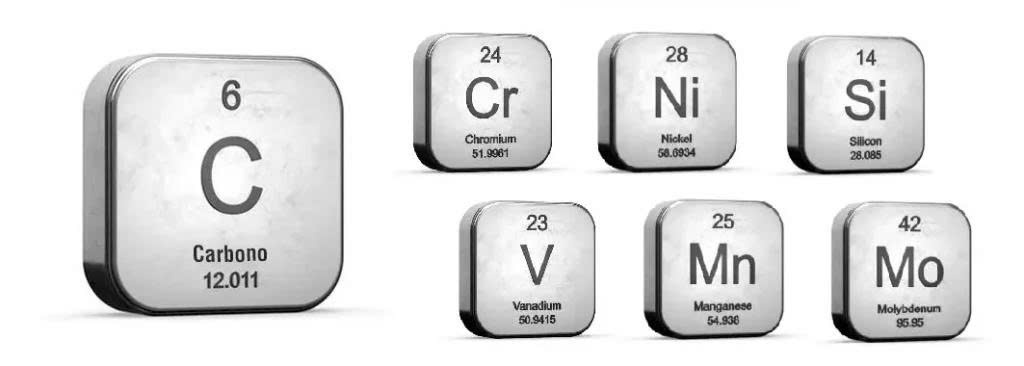
In steelmaking, chemical composition is a key factor that determines many material properties. Changes in the content of Carbon (C), Silicon (Si), Manganese (Mn), Chromium (Cr), Nickel (Ni), and Molybdenum (Mo) and other elements can change steel’s mechanical properties, workability, corrosion resistance, and strength.
The question for the Quality Assurance and Quality Control team is: How can you verify that the actual material matches the grade and technical requirements before production?
Changes in chemical composition can alter steel properties
- Each element in steel has a specific role. When an element’s content falls outside the specified range, the steel’s properties may change.
- For example, the amount of Carbon (C) significantly affects steel hardness, strength, and weldability. Meanwhile, Chromium (Cr), Nickel (Ni), and Molybdenum (Mo) are important to corrosion resistance and the mechanical properties of many steel grades.
- Therefore, steels that look alike but have different chemical compositions can still have different performance and durability.
Incorrect composition can mean the wrong steel grade
- Each steel grade has a chemical composition range defined by its standard.
- If the actual composition does not meet the specified limits, the material may be misidentified or fail to meet technical requirements.
This risk is especially important when a company uses multiple steel types with similar compositions and appearance. Visual identification or relying solely on material certificates cannot confirm the actual composition of each sample.
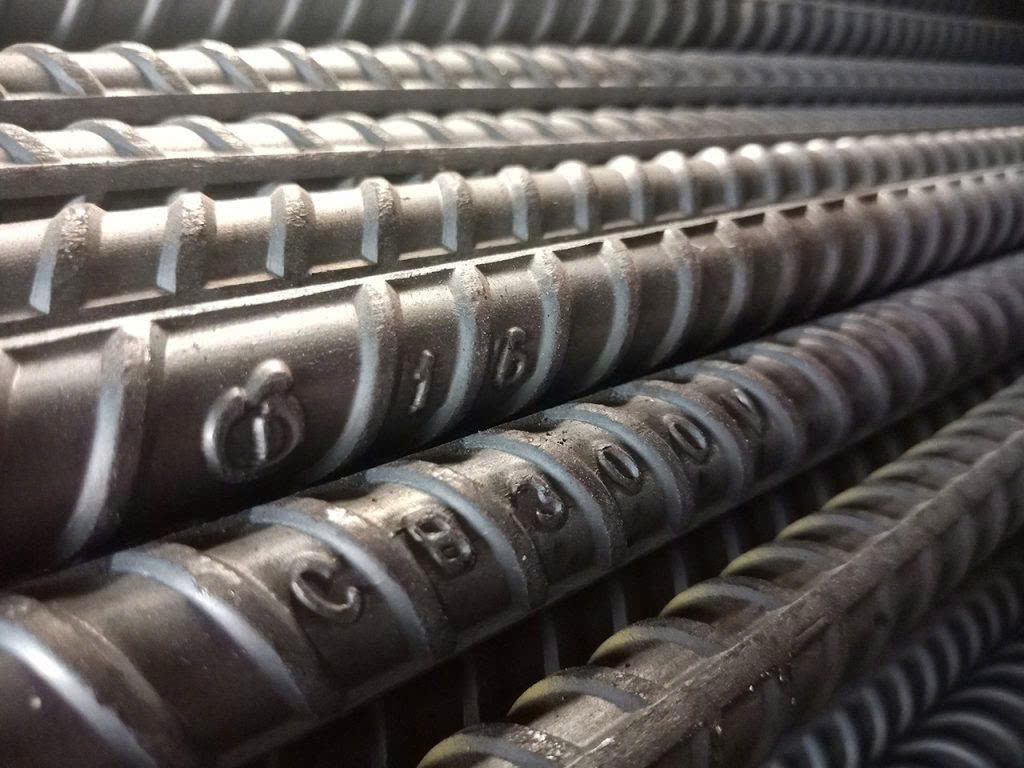
Effects on steel product quality and service life
Changes in chemical composition can affect:
- Steel hardness and strength
- Ductility and toughness
- Wear resistance
- Corrosion resistance
- Weldability and workability
- Ability to meet operating conditions
- For steel components operating under high loads, high temperatures, or corrosive environments, using material that does not meet requirements can increase failure risk and shorten product life.
The later incorrect material is discovered, the higher the cost
- A common manufacturing issue is that nonconforming steel is discovered only after machining or product completion.
- The company may then face: Incorrect material → Production → Machining → Nonconformance found → Rework/product rejection → Higher cost and longer lead time.
- Therefore, checking chemical composition at the incoming material stage helps the Quality Assurance and Quality Control (QA/QC)team detect unsuitable steel early and limit risks in later production stages.
Foundry-Master Smart 2 – Steel composition control on the shop floor
For businesses that need a benchtop OES solution for steel inspection, Hitachi High-Tech Foundry-Master Smart 2is designed for QA/QC, steel analysis, and foundry process control.
The instrument uses a CMOS sensor combined with a stable spark source, supporting stable, highly repeatable analytical results.
Foundry-Master Smart 2 can analyze key elements in steel such as Fe, C, Si, Mn, Cr, Ni, and Moand other elements depending on the analytical configuration.
With its integrated material-grade database, the instrument also supports identification and comparison of steel grades based on measured composition, enabling QA/QC teams to quickly check whether steel meets requirements.
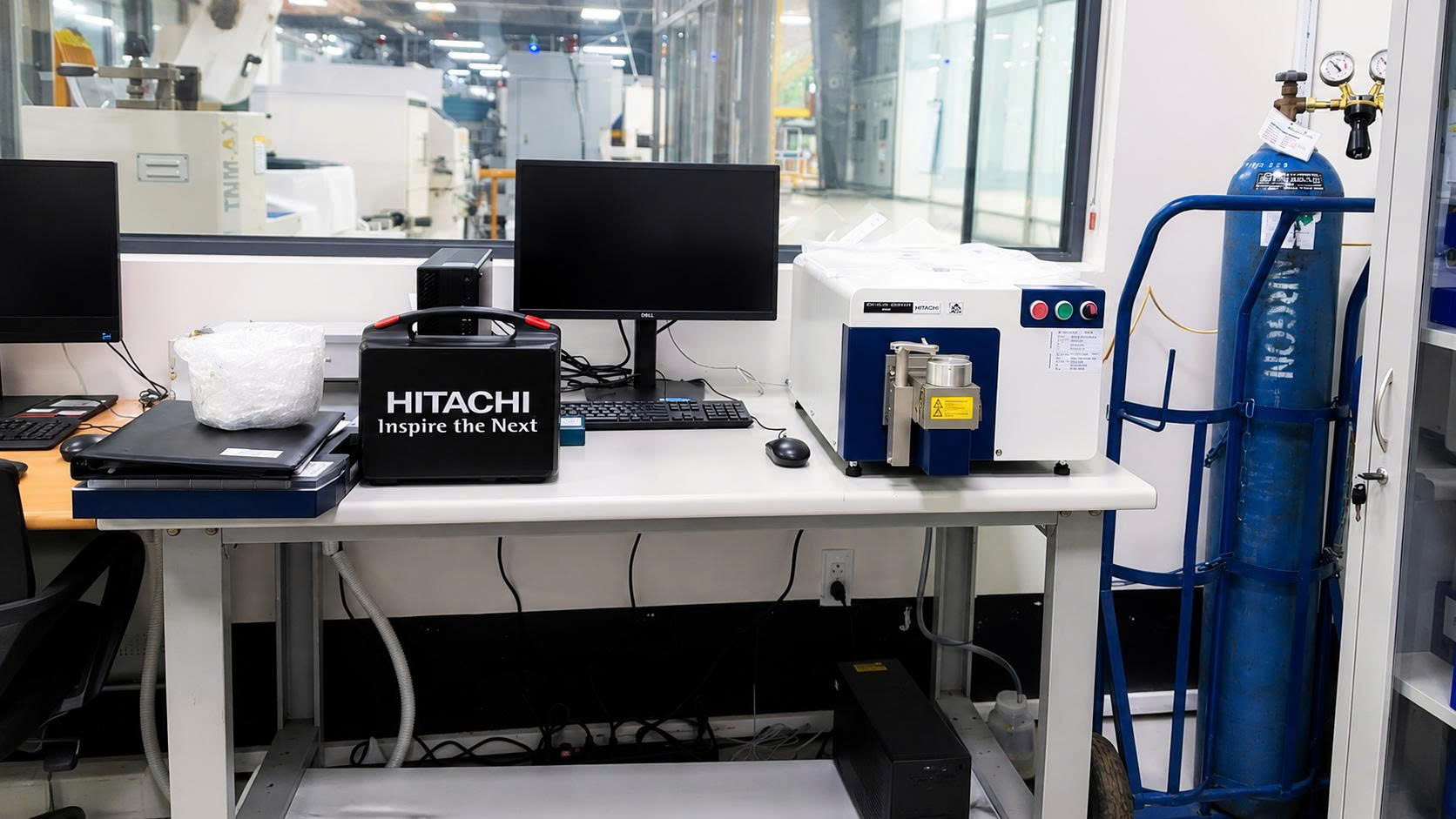
- Incoming material inspection: Verify the actual steel composition before production.
- Steel grade verification: Compare measured composition with the requirements for each grade.
- Foundry quality control: Monitor steel composition during production and support quality control.
- Finished product inspection: Verify chemical composition before the product moves to the next stage or ships.
Control steel composition early to reduce risk
- Chemical composition deviations may not be visible, yet directly affect the properties, quality, and reliability of steel products.
- Instead of investigating only after a product fails inspection, companies can check and verify steel composition from the start.
Foundry-Master Smart 2 is a benchtop OES solution that helps companies control steel composition, verify material grades, and support production QA/QC.
Quoc Huy Technique provides material analysis and inspection equipment solutions for Quality Assurance and Quality Control (QA/QC), foundry, metallurgy, and mechanical machining applications.
Need to check chemical composition or verify a steel grade for production?
Contact Quoc Huy Technique for advice on a suitable OES solution.
- Email: info@quochuy.com
- Hotline: (+84) 828 31 08 99
Frequently Asked Questions
Analyze a steel sample’s chemical composition and compare the results with the grade limits in the applicable standard. This verifies the actual material rather than relying only on appearance or documents.
Yes. Inspection on receipt can identify the wrong grade or unsuitable steel before production, reducing the risk of rework or scrapping.
A certificate describes a material lot, but testing an actual sample confirms that the delivered steel meets requirements, especially when several similar grades are used.
Optical emission spectroscopy (OES) analyzes the elemental composition of steel to support grade verification, incoming inspection, foundry process control, and finished-product inspection.
Yes. Foundry-Master Smart 2 (FMS2) analyzes a sample’s chemical composition and compares the results with its material-grade database to help QA/QC assess compliance with technical requirements.


