
Spark OES: The Gold Standard in Modern Metal Analysis
Optical emission spectroscopy (OES) includes several analytical techniques, but Spark OES (also called arc/spark spectroscopy) is a leading method for fast, accurate metal analysis. Unlike ICP-OES, which requires liquid samples, Spark OES analyzes solid metals directly, making it essential in metallurgy, manufacturing, and recycling.
How Spark OES Works
Spark OES creates a high-energy electrical spark between an electrode and a conductive metal sample in an argon atmosphere. The spark vaporizes a small amount of material and excites its atoms into a plasma state. As electrons return to lower energy levels, they emit light at wavelengths characteristic of each element. A spectrometer separates and measures these wavelengths to determine sample composition.
Key features:
- Direct solid metal analysis: No sample dissolution is needed.
- Immediate results: Determines the full elemental composition in 20–30 seconds.
- Broad element coverage: Detects elements from nitrogen to uranium, including carbon, sulfur, and phosphorus.
- High accuracy: Precisely measures trace elements (ppm) and major alloy constituents.
Advantages Over Other Methods
High Speed and Efficiency
Spark OES outperforms AAS and ICP-MS for solid metal analysis by eliminating complex sample preparation. This speed enables real-time process adjustments in steel mills and foundries.
Simple Sample Preparation
Unlike ICP-OES, which requires acid digestion, Spark OES only needs a clean, flat metal surface. This reduces contamination risk and operator effort.
Durability in Harsh Environments
Designed to withstand vibration, temperature changes, and dust, Spark OES is suitable for industrial production environments.
Cost Savings
Operating costs are lower than ICP-MS because expensive gases are not required, and throughput is higher than AAS.
Top Applications of Spark OES
Metal Production and Quality Control
- Alloy verification: Confirms compliance with ASTM or ISO standards.
- Trace element monitoring: Detects impurities, such as lead in steel, that affect material properties.
- Non-metallic inclusion analysis: Identifies particles that weaken metal.
Metal Scrap Sorting
Spark OES rapidly sorts metals such as stainless steel and aluminum alloys, maximizing scrap value and recycling efficiency.
Automotive and Aerospace Manufacturing
- Component certification: Checks engine alloys, aircraft housings, and bolts against required standards.
- Failure analysis: Identifies material defects in recovered components.
Research and Development
- New alloy development: Provides accurate composition data to optimize strength and corrosion resistance.
- Coating analysis: Measures surface-treatment thickness, such as galvanized steel coatings.
Technology Advances in Modern Spark OES
New Spark OES systems integrate several innovative technologies:
- Automation: Robotic sample loading reduces human error.
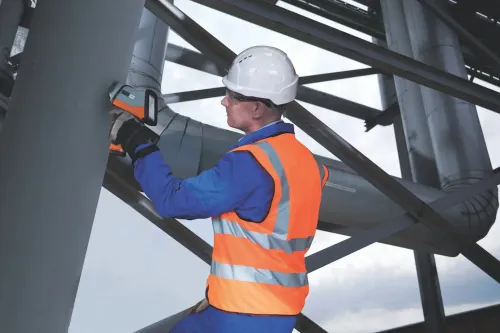
- Portable devices: Mobile Spark OES instruments analyze samples on site, including pipe inspections.
- AI software: Machine-learning algorithms improve accuracy and automate spectral analysis.
- Higher sensitivity: CCD sensors improve detection limits for light elements such as carbon.
Limitations of Spark OES
Despite its capabilities, Spark OES has some limitations:
- Conductive materials only: Non-metallic samples such as plastics and ceramics require another method.
- Surface analysis: Results represent the surface layer (~µm), not the entire bulk.
- Sensitivity limits: ICP-MS performs better for ultra-trace elements below ppm.
Comparing Spark OES with Other Techniques: Which Should You Choose?
| Factor | Spark OES | ICP-OES | AAS |
|---|---|---|---|
| Sample type | Solid metals | Solutions, dissolved solids | Solutions |
| Detection limit | ppm | ppb–ppm | ppm |
| Multi-element speed | Seconds | Minutes | Slow (one element at a time) |
| Cost | Medium | High | Low |
Selection guide:
- Need to analyze solid metals? → Spark OES.
- Need ultra-trace sensitivity (ppb) or non-metal analysis? → ICP-OES/MS.
- Have a limited budget and simple needs? → AAS.
Future Trends for Spark OES
- Greater portability: Compact instruments for field use.
- Green manufacturing: Reduced argon consumption and optimized energy use.
- Hybrid systems: Combining Spark OES with LIBS to expand elemental coverage.
Ready to upgrade your laboratory with Spark OES? Contact us for a demo or consultation.
Frequently Asked Questions
Spark OES analyzes the elemental composition of solid metals by generating an electrical spark that excites elements to emit characteristic light. It is widely used in alloy quality control, scrap recycling, and industrial production.
The instrument creates a spark between an electrode and a metal sample in argon, producing plasma. A spectrometer analyzes the plasma light to identify elements and their concentrations.
Main applications include metallurgy, automotive and aerospace manufacturing, scrap recycling, and alloy R&D. Examples include sorting stainless steel and checking impurities in aircraft components.
Spark OES is faster than AAS, less expensive than ICP-MS, and analyzes solid metals directly. Choose it when you need ppm results in seconds without ppb/ppt sensitivity.
It cannot analyze non-metallic materials such as plastics or ceramics, measures only the surface layer (~µm), and is less sensitive than ICP-MS for ultra-trace elements.
Investment cost is moderate and lower than ICP-MS. It suits industrial laboratories and medium-to-large businesses that need frequent, rapid analysis.
Trends include portable instruments, AI integration for automated spectral analysis, and lower energy and labor requirements.
No. The metal surface only needs to be flat and clean; dissolution or chemical treatment is not required.
It detects elements from nitrogen (N) to uranium (U), including carbon (C), sulfur (S), and phosphorus (P), which are important for steel and alloy analysis.
Steel manufacturers, metal recycling plants, machine shops, and materials laboratories that need rapid quality checks of raw materials or finished products.