

How to Check Hardness on the Shop Floor After Machining: Equotip 550
After machining, heat treatment, or surface treatment, hardness testing is an important step in assessing quality and confirming that a part meets technical requirements.
In production, however, it is not always practical to bring a part to an inspection lab. Large, heavy, bulky, or installed parts can take considerable time to remove and transport.
In these situations,the Equotip 550 Proceq - Screening Eagle portable hardness testerlets technicians bring the instrument to the inspection location and take measurements on the shop floor or in the field, depending on the sample condition and suitable test method.
Why Check Hardness After Machining and Heat Treatment?
Hardness is a commonly used measure for assessing and controlling a material’s mechanical properties.
After machining or heat treatment, a business may need to test hardness to:
- Confirm that a part meets the specified hardness requirement
- Check the results of heat treatment
- Assess hardness uniformity at multiple locations
- Inspect a part before it moves to the next process
- Help QA/QC verify material quality
- Detect locations with nonconforming results early
For large parts in particular, taking a sample to a stationary hardness tester may be inconvenient. In that case,a portable hardness testeris a suitable solution for testing the part directly.
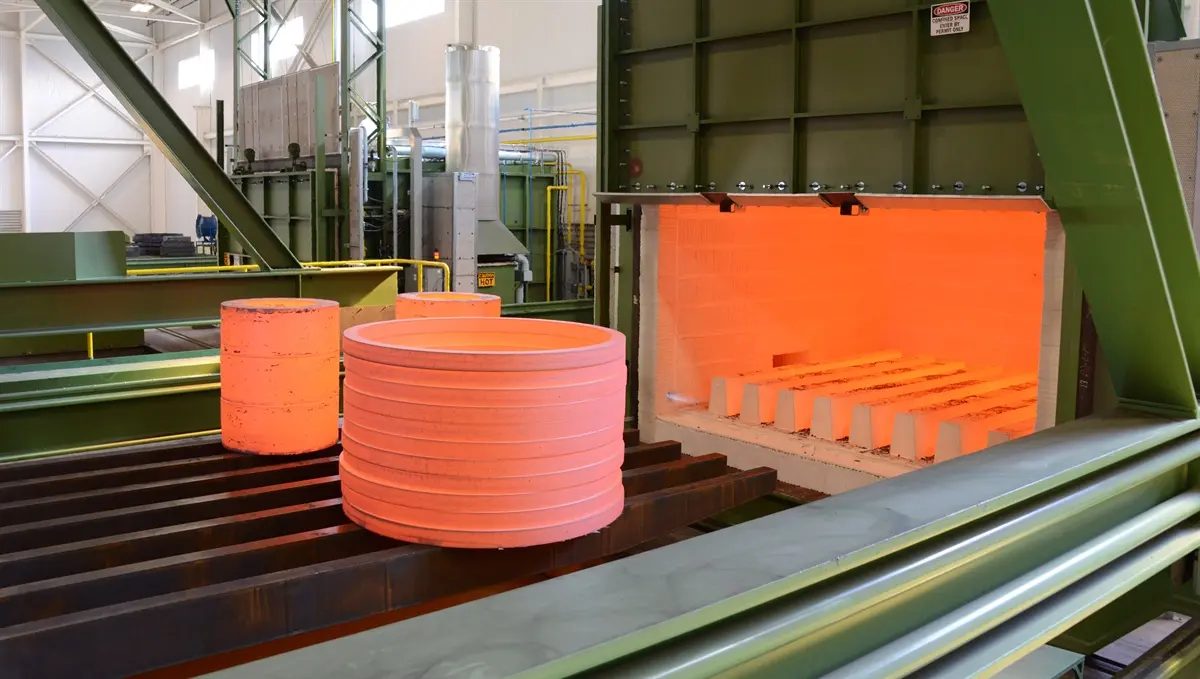
When Should You Use a Portable Hardness Tester?
A business cannot always bring a sample to a laboratory.
Common situations include:
- Large, heavy parts
- Parts with complex shapes
- Parts that are difficult to remove or transport
- A need to test multiple locations on one part
- A need to test directly on the shop floor
- A need to test in the field
- Parts that are already installed
- A need for quick checks after machining or heat treatment
In these cases, technicians can bring the instrument to the inspection location instead of moving the entire part to a stationary tester.
This is one of the main advantages ofEquotip 550.
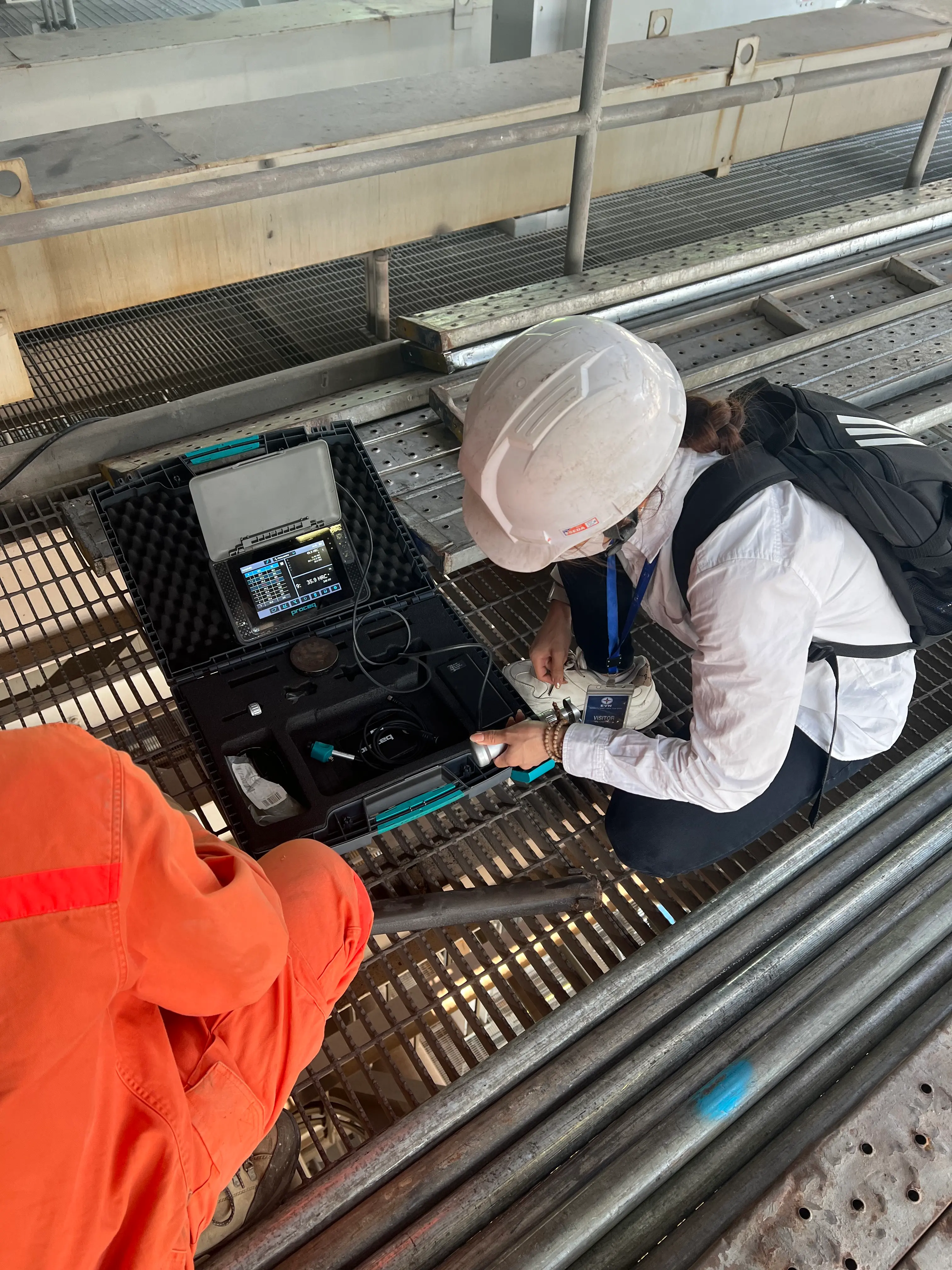
Equotip 550: Portable Hardness Testing on the Shop Floor and in the Field
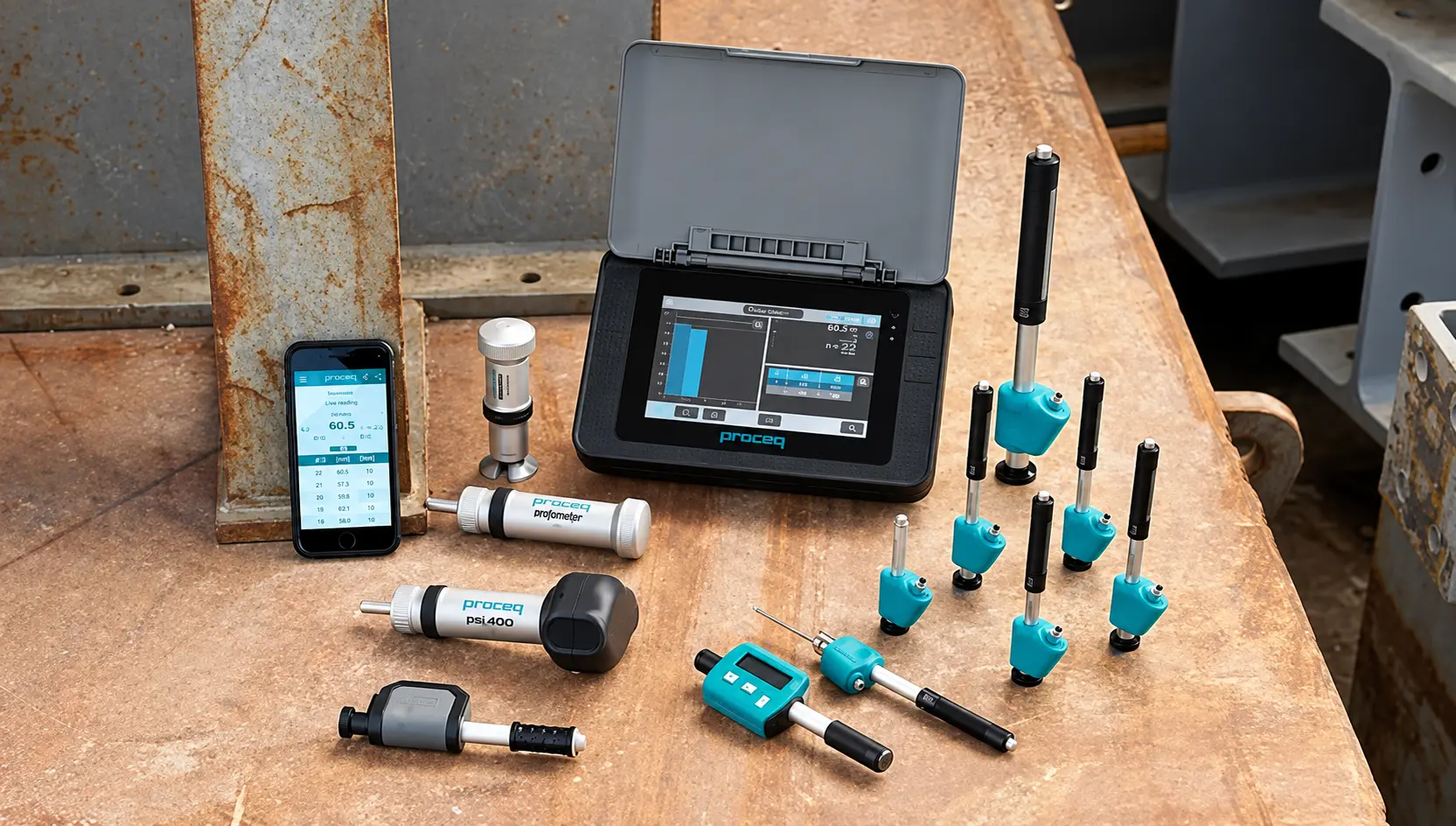
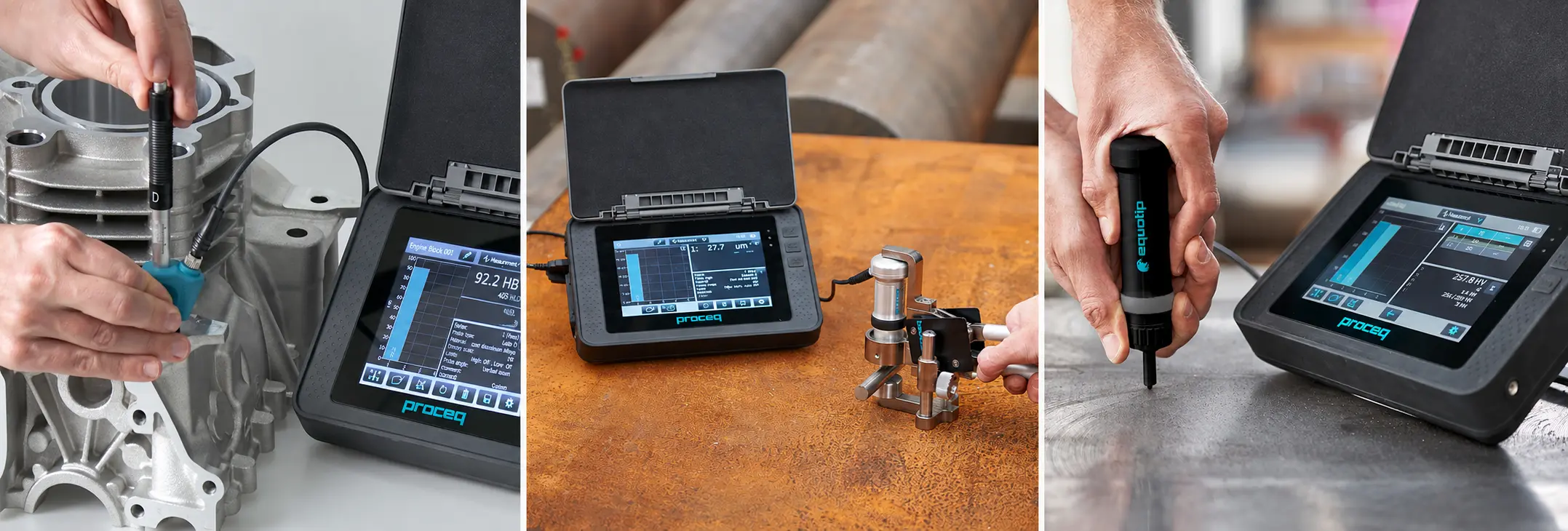
Equotip 550 is a portable hardness testing system fromProceq - Screening Eagle, designed for hardness testing across a range of parts and materials.
The instrument supports several test methods, allowing users to choose one suited to the sample:
- Leeb :is suitable for many tests on large parts such as castings, shafts, flanges, and parts inspected in the field.
- UCI :is suitable when a small indent is needed and for certain surfaces, materials, or confined areas.
- Rockwell :supports Rockwell testing for suitable applications.
The test method should be selected based onthe material, size, shape, thickness, surface condition, and inspection location.
Need to Check a Large Part Without Sending It to a Lab?
This is a common challenge at machining, casting, forging, and metalworking plants.
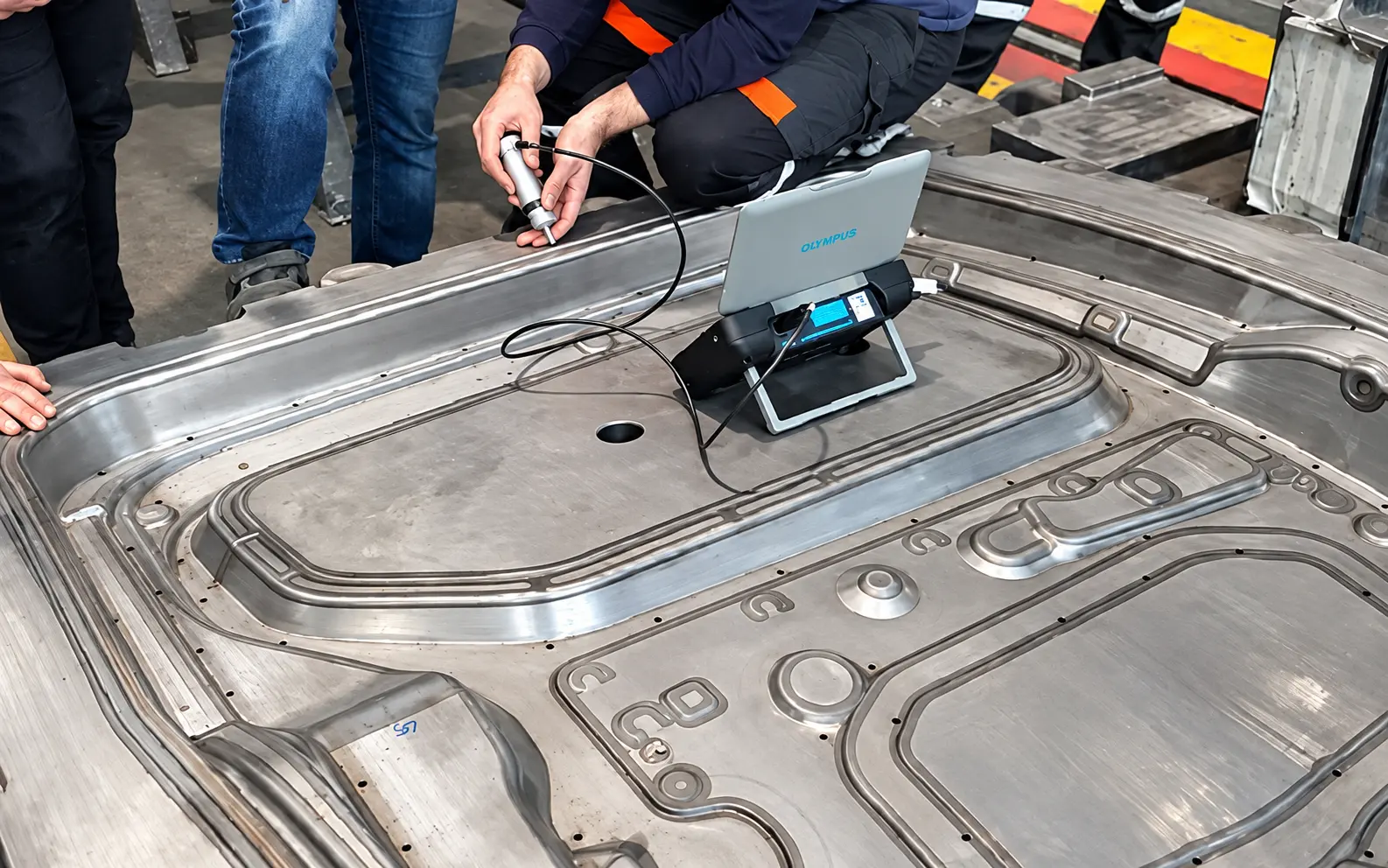
For example, with alarge shaft, flange, or casting, transporting a sample to an inspection room can require extra time and labor.
Its portable design lets technicians measure directly at the inspection location, depending on the sample condition and selected method.
The inspection can follow these steps:
Identify the test location → Prepare the surface → Select the method and probe → Take measurements → Evaluate results → Save the results
This brings hardness testing closer to the actual production process.
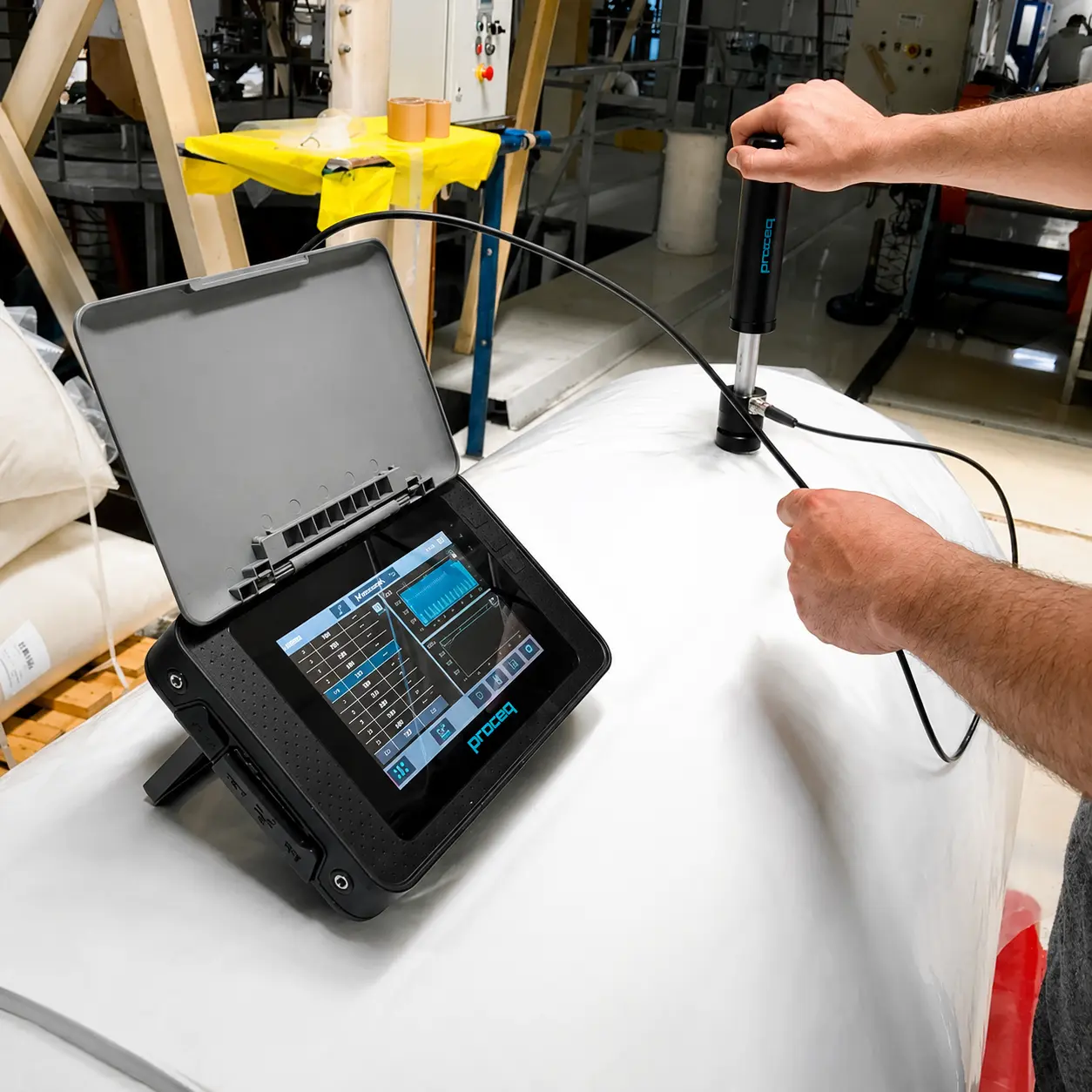
How Should the Surface Be Prepared Before Hardness Testing?
A portable hardness tester allows more flexible testing, butsurface preparation remains an important step.
The surface at the test location must meet the requirements of the selected method and probe. Factors such as:
- Surface roughness
- Rust or dirt
- Coatings
- Flatness
- Part thickness
- Part shape and test location
can affect the measurement.
Therefore, technicians should assess the sample condition and select a suitable test method before inspection.
Which Applications Suit Equotip 550?
With portable measurements and support for several methods,Equotip 550can be used in many hardness testing situations.
Typical applications include:
- Hardness testing of castings
- Testing forged parts
- Testing shafts and flanges
- Testing pipes and metal parts
- Testing after heat treatment
- Testing after machining
- Shop-floor quality checks
- Field inspections
- Testing large, heavy, or difficult-to-move parts
- Testing multiple locations on one part
For QA/QC, measurement data can support quality assessment and verification against each product’s technical requirements.
When Should a Business Choose a Portable Hardness Tester?
A business may considerEquotip 550when they regularly face situations such as:
- A need to measure hardness on the shop floor
- Parts too large or heavy to bring to a stationary tester
- A need to inspect parts in the field
- A need to test after heat treatment
- A need to test multiple locations on a part
- A goal of reducing sample transport time
- A need for one instrument that can switch between test methods
The key is not to choose an instrument that “measures everything,” but to select the right test method for each application.
Before choosing a hardness tester, consider the material, part size and shape, surface condition, test location, and technical requirements.
Why Demo Equotip 550 on a Real Sample?
Catalogue specifications are only one part of selecting an instrument.
For a portable hardness tester, a demonstration on a real sample helps a business assess:
- Where measurements can be taken
- Which method and probe are suitable
- The sample surface condition
- How easy it is to operate on the shop floor
- How to read and evaluate results
- How well it fits the current inspection process
That is why Quoc Huy prioritizes demonstrations on customers’ actual samples instead of presenting the instrument only in theory.
Equotip 550: More Flexible Hardness Testing on the Shop Floor
When a part is large, difficult to move, or must be inspected in the field, a portable hardness tester can give a business more flexibility in its inspection process.
The Equotip 550 Proceq - Screening Eagle supports portable Leeb, UCI, and Rockwell methods for a range of hardness testing needs across different parts and materials.
The suitable method and configuration should be selected based on the actual sample and specific inspection requirements.
Quoc Huy Technique provides Equotip 550 hardness testing solutions in Vietnam, supporting businesses with consultation, demonstrations on real samples, and technical assistance.
Frequently Asked Questions
Yes. Equotip 550 is a portable hardness testing system suitable for shop-floor and field inspections, depending on the sample condition and test method.
Yes. Equotip Leeb is used for many applications on large parts such as castings, shafts, and flanges when the sample meets the method requirements.
Equotip 550 supports portable Leeb, UCI, and Rockwell methods. The suitable method depends on the specific part being inspected.
Yes. The test surface should be prepared for the selected method and probe. Roughness, coatings, rust, and surface condition can affect the measurement.
Yes. It can be used for hardness checks after heat treatment, depending on the material, surface condition, and selected test method.
No single method suits every application. Consider the material, size, shape, thickness, surface, and test location when selecting a method.
Yes. A demonstration on a real sample helps identify a suitable method, probe, and testing procedure before choosing an instrument for your inspection process.


