

Cygnus 1 Ex: Thickness Measurement in Explosive Atmospheres
Cygnus 1 Ex is intrinsically safe (Intrinsically Safe), certified for Zone 0 and suitable for hazardous environments.We have used several impressive claims to introducethe Cygnus 1 Ex ultrasonic thickness gauge, but what do those claims really mean? This article explains the terms and the rules for using equipment in hazardous areas.
What Are Explosive Atmospheres?
The term“Ex”is recognized worldwide for hazardous explosive environments and for certification programs and standards designed to prevent explosions in those environments.
Hazardous areas are places where fire or explosion may occur because flammable or combustible substances are present in the air. These substances may include:
- Gases
- Vapours
- Dusts
At sufficiently high concentrations, these substances can form an explosive mixture. A spark, electrical discharge, or heat can then ignite it.
Global Ex Schemes and Standards
Like the term“Ex”, these standards systems are named to support recognition around the world.
The IEC standards system is recognized by the United Nations and provides a common reference so countries can understand and apply Ex assessment systems consistently.
IECEx is a certification system for equipment used in potentially explosive atmospheres, following international standards issued by the International Electrotechnical Commission (IEC).
The map below (after Mirko Torrez Contreras, 2021) shows the Ex systems and standards currently used by each country. Most Ex systems worldwide are based on IECEx.
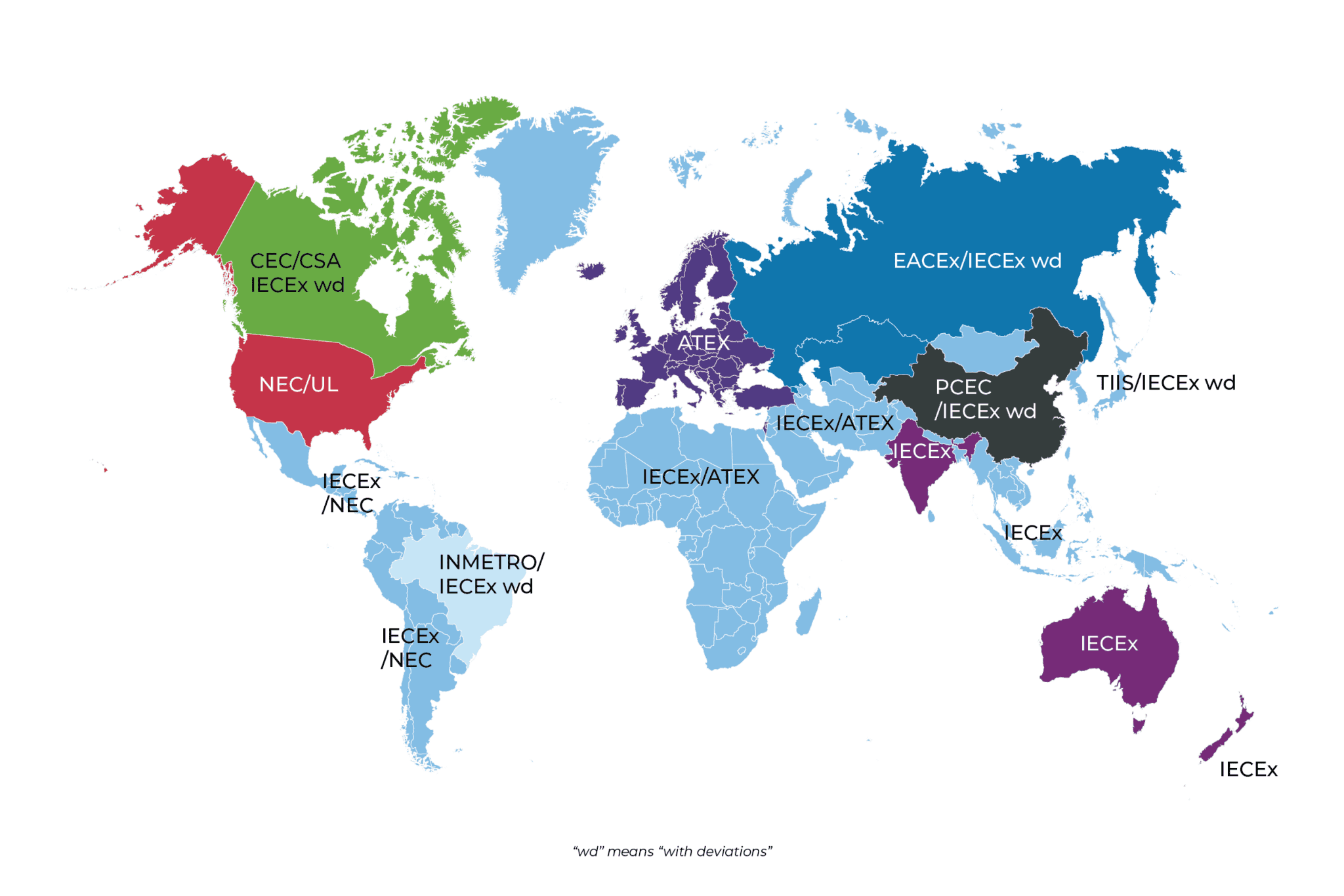
Global Ex Certification Systems
The map shows that Ex equipment systems are used worldwide and are mostly based on the international IECEx standards.
Representative regional systems include:
| Region | Certification system | Applicable standard |
|---|---|---|
| North America | NEC / UL Scheme | UL 60079 |
| Europe | ATEX Scheme | EN 60079 |
| United Kingdom (UK) | UKEX Scheme | BS EN 60079 |
| Brazil | INMETRO Scheme | EN 60079 |
The Cygnus 1 Ex ultrasonic thickness gaugeCygnus 1 Exis fully certified toIECEx, ATEX, and UKEX, allowing safe use in explosive atmospheres worldwide.
In particular,Cygnus 1 Exis theONLYdevice today to meet the highestATEX - Zone 0; equivalent to NEC (UL) Class I Division 1 Group “ALL”
What Are Zones and Divisions?
These are hazardous-area classification systems:
- “Zone”is used in the European ATEX system and international IECEx system.
- “Class”, “Division”, and “Group”are used in the North American NEC/UL system.
IECEx / ATEX classification (by frequency of explosive gas presence):
| Zone | Description |
|---|---|
| Zone 0 | An area where an explosive gas mixture is present continuously or for long periods. |
| Zone 1 | An area where an explosive gas mixture is likely during normal operation. |
| Zone 2 | An area where explosive gas is unlikely during normal operation and, if it occurs, remains only briefly. |
Zone 0 is the area with the highest explosion risk.
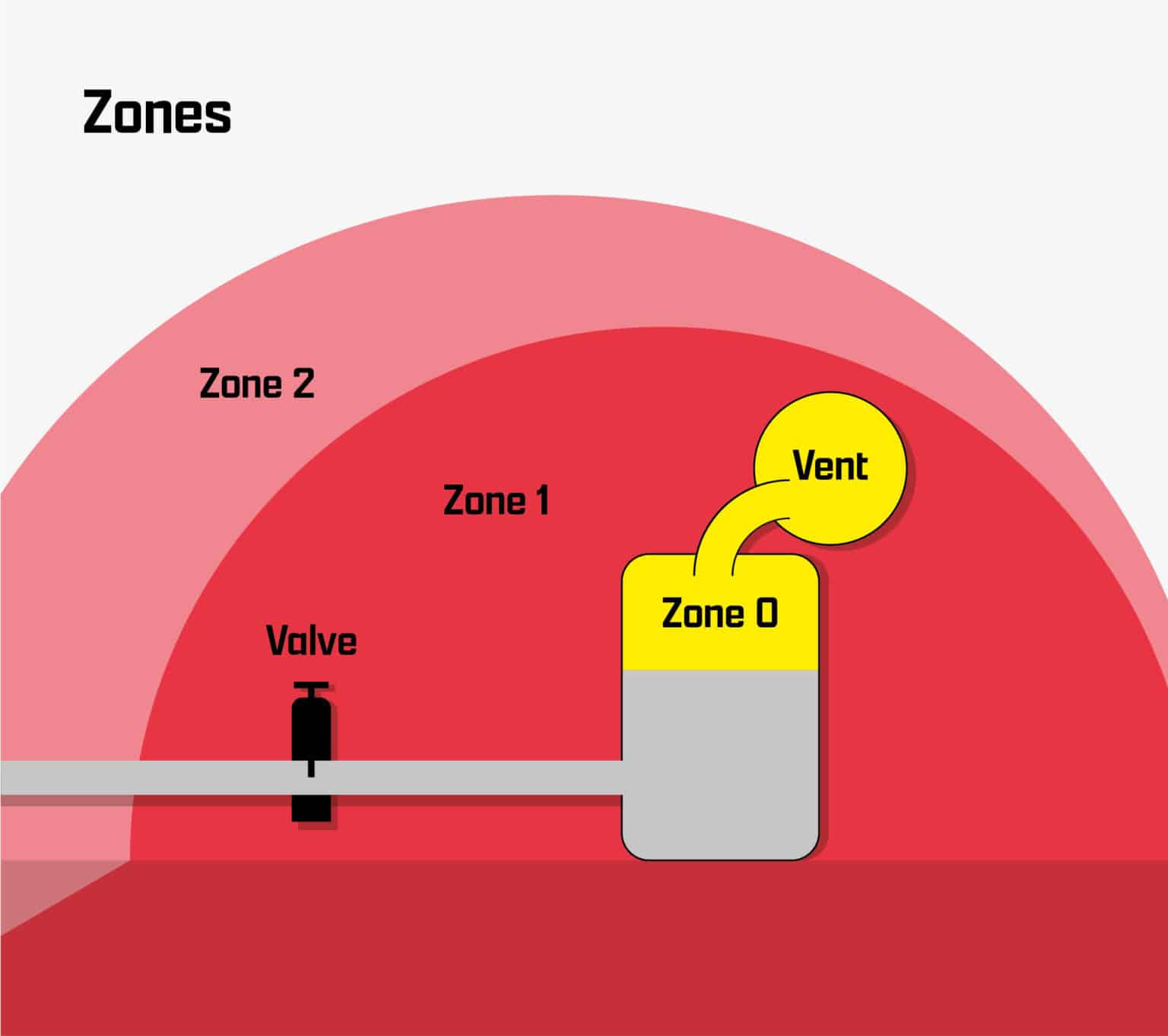
Comparison of Zones and Divisions in hazardous-area classification
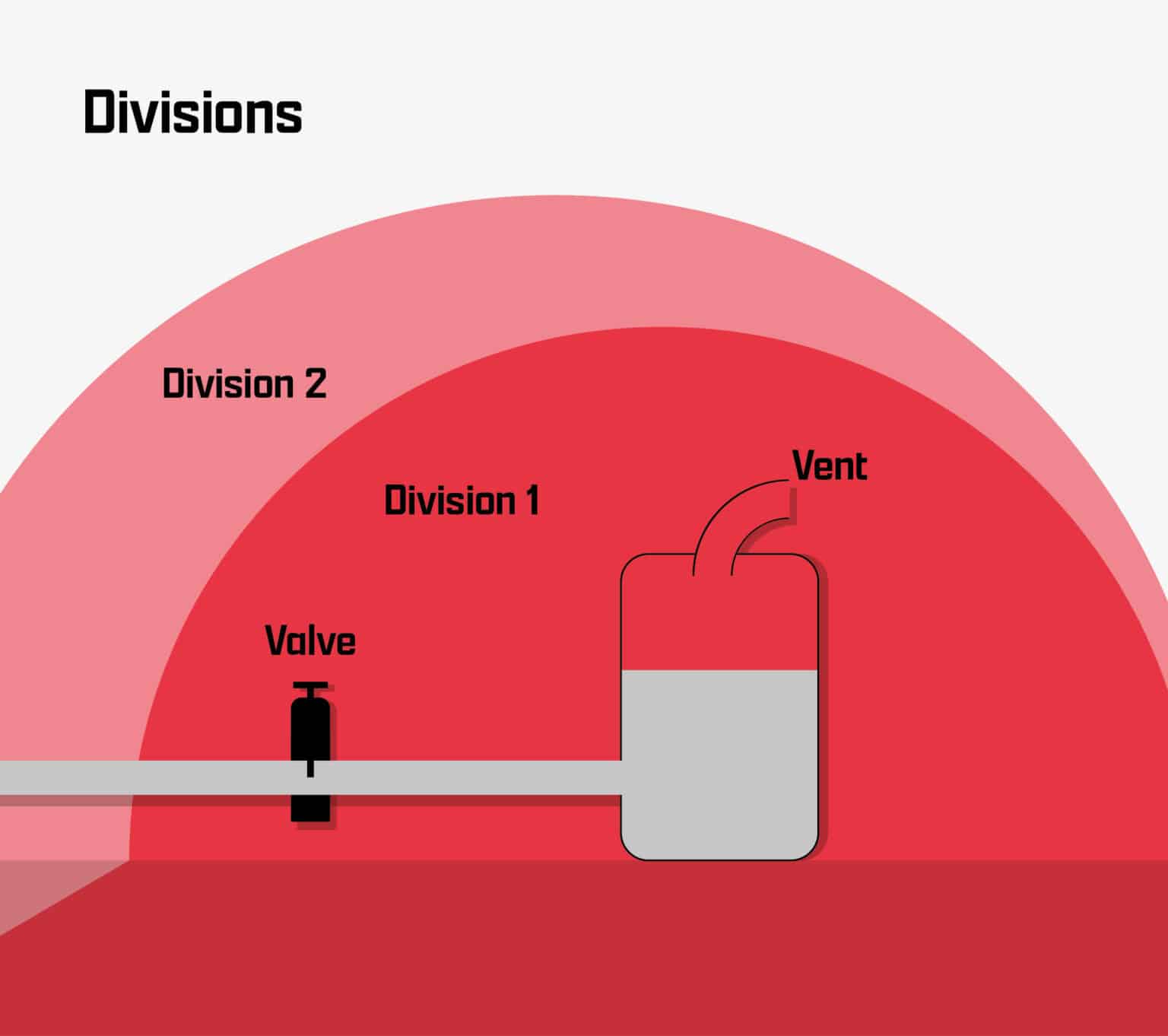
In the North American NEC/UL system, hazardous areas are classified byDivisioninstead ofZoneas in ATEX or IECEx.
| North American system (NEC/UL) | ATEX/IECEx equivalent |
|---|---|
| Division 1 | Equivalent toZone 0 and Zone 1– areas where explosive gas may be present frequently or periodically during normal operation. |
| Division 2 | Equivalent toZone 2– areas where explosive gas is unlikely and, if present, lasts only briefly. |
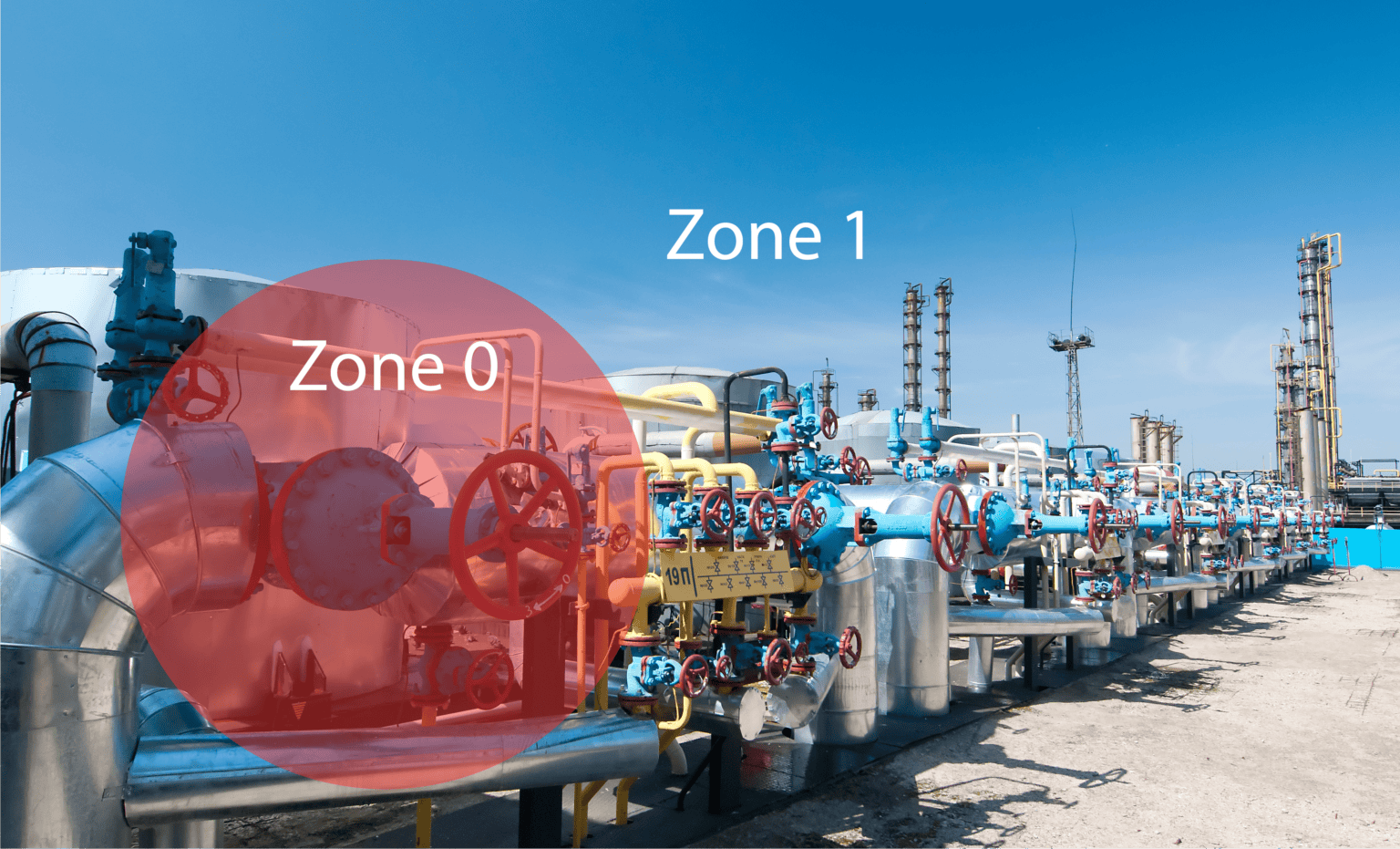
A plant or industrial facility may contain areas classified into different Zones or Divisions according to their potential hazard level.
Once hazardous areas have been identified,warning signs must be installedtowarn and provide informationto anyone entering or leaving the area.
It is important to note thatZone/Division classifications are not fixed; they can change during operation. For example:
- If there is aleak at a weld, flange, or valve, the surrounding area may be upgraded fromZone 1 to Zone 0, because the explosion riskbecomes continuous or lasts longer.
Recognizing and responding promptly to these changes is essential to protect people, equipment, and infrastructure.
Ex Standards Compared with Other Test Methods
Several methods are used to test equipment inhazardous areas, and it is important to understand how they differ from Ex standards.
MIL-STD-810G (U.S. military standard)
- Checks only whether the device causes an explosion at the time of testing.
- It does not assess explosion risk during actual field use, after a drop or failure, or if the battery short-circuits.
- Therefore, it does not guarantee that the device will remain non-explosive throughout its service life.
Ex standards (ATEX / IECEx / NEC-UL)
By contrast, Ex standards provide a high level of assurance that equipment remains safe even when faults occur. Specifically:
- Equipment is designed for safety from the outset, not just made to pass a single test.
- Redundant safety circuits are built in so another system maintains safety if one protection system fails.
- Equipment must pass rigorous tests, including:
- Drop test
- Water/dust ingress protection (IP) test
- Battery short-circuit testing to ensure it does not explode or generate dangerous heat
- Materials must be antistatic to prevent charge buildup that could create a spark.
Comparison of Ex and MIL-STD-810G standards
| Criterion | Ex (ISO 60079 – IECEx / ATEX / UKEX / NEC-UL) | MIL-STD-810G (Method 511.5 – Procedure I) |
|---|---|---|
| Assessment method | Follows international explosion-protection standards; equipment must be safe by design. | A single test in an explosive environment (4% n-hexane/air mixture). |
| Legal status | A Notified Body inspects and issues a legally recognized Ex certificate. Manufacturers undergo periodic audits. | No certificate; it is not Ex certification and has no binding legal status. |
| Certification and area classification | An EPL (Equipment Protection Level) specifies which Zones are permitted. | The equipment is not approved for use in Ex Zones. |
| Fault conditions | Multiple simultaneous fault scenarios are tested, and redundant safety circuits are required. | No fault testing; drops and battery short circuits are not considered. |
| Battery / sparks / short circuits / static electricity | Temperature, sparks, short circuits, and static-charge buildup must be tested. | Battery sparks and static buildup are not tested. |
| Intended use | For equipment used in hazardous areas. | For physical reference only; it does not assure safety in hazardous environments. |


